Skip to content

graphic design

8 Criteria for Evaluating Online Graphics Tools and Asset Libraries
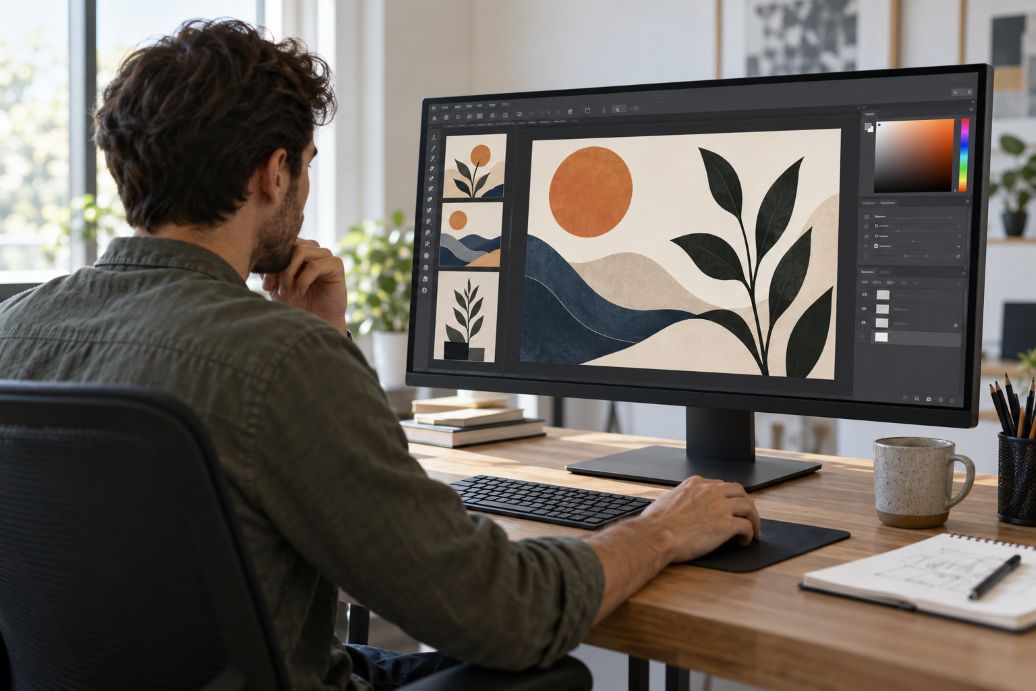
    evaluating online graphics toolsRaster images store visual information as pixels, while vector graphics use scalable shapes, as Adobe explains in its graphics documentation. That distinction matters when choosing online design resources. A tool suited to editing photographs may offer little control over illustrations. Evaluate each option against the intended project, starting with the required output rather than the template gallery.

    Categorized browsing through Websites by Category (카테고리별 웹사이트) can provide a starting point for discovering alternatives. Build a shortlist, then check each provider’s documentation and test representative files. For freelancers, educators, and small teams, the useful question is practical: can this resource produce the right result, under acceptable conditions, without creating extra work later?

    1. Does It Support the File Formats You Need?

    Check import and export formats separately. Being able to upload a file does not establish that you can download an editable version. Canva, for example, documents different download formats for different purposes, including JPG, PNG, PDF, and presentation exports.

    List the files your workflow requires before testing. Include incoming client materials and final deliverables. Open an exported sample in its destination application. Check transparency, text, and layout instead of assuming that a familiar file extension guarantees a clean handoff.

    2. What Can You Actually Do With Vectors and Pixels?

    Adobe distinguishes pixel editing from working with scalable vector shapes. Use that distinction to examine capabilities beyond a product’s description. For photographs, test cropping, selection, and color adjustments. For illustrations, try changing paths, fills, outlines, and individual shapes.

    Apply the same scrutiny to downloaded assets. Try selecting separate components rather than moving the entire illustration. If your assignment requires recoloring individual objects, make that a requirement. Judge the resource by the edits you need to perform, rather than the appearance of its preview.

    3. Are Resolution and Scaling Limits Suitable?

    Assess image dimensions against the final output size. Adobe identifies 300 pixels per inch as a common standard for high-quality printing, while explaining that large prints viewed from farther away may work at lower resolutions. Confirm the specification with your printer.

    For example, an image measuring 1,800 pixels across provides six inches of width at 300 pixels per inch. Use this calculation before approving an asset. Test the largest required export, then inspect fine details and edges at the intended display or print size.

    4. What Do the License and Attribution Terms Allow?

    Creative Commons describes licenses with different conditions for attribution, commercial reuse, and sharing adaptations. Its Non-Commercial licenses restrict commercial use, while NoDerivatives licenses prohibit sharing adapted versions. Read the specific terms attached to the selected work rather than relying on a general download label.

    For other libraries, check the provider’s own agreement. Look for terms covering your intended use, client delivery, modification, and redistribution. Save the asset’s source and applicable license details. If attribution is required, decide where the credit will appear before approving the design.

    5. Is the Asset Collection Consistent and Relevant?

    Evaluate quality with a sample that reflects your actual assignment. Search for several related subjects, then compare proportions, line weights, lighting, and visual style. Treat these as selection criteria rather than accepting the first attractive result. Ask whether the collection supports a coherent finished design.

    Test variety within that style. For a presentation, try finding matching illustrations for three different slides. For a website, assemble a small icon set. Record missing subjects and awkward substitutions. This gives you a concrete basis for comparing collections beyond their advertised asset counts.

    6. How Much Editing and Customization Is Available?

    Separate the ability to place an asset from the ability to modify it. Adobe explains that flattening merges layers into a single image. When future revisions matter, check whether your working file retains the separate elements you expect to change.

    Run a small editing exercise. Replace a photograph, adjust colors, change a heading, and resize the composition. Then save, reopen, and revise it again. For shared work, ask a colleague to make one change. Use the results to judge whether the workflow suits the people maintaining it.

    7. Will It Work on Your Browser and Device?

    Review the service’s published technical requirements. Canva specifies supported browsers, requires JavaScript, and recommends a stable internet connection to avoid saving problems. Check the relevant documentation for every shortlisted tool rather than assuming all browser-based editors have identical requirements.

    Test with your usual equipment and a representative project. Upload images, move objects, save changes, and download the result. If mobile editing matters, repeat essential tasks on that device. Record any difficulty selecting objects or navigating controls, and judge whether those limitations affect your everyday work.

    8. What Restrictions Apply to the Final Export?

    Inspect the download controls before investing time in a complete design. Canva documents account-dependent options for features such as transparent backgrounds, SVG downloads, and certain quality settings. It also warns that presentation exports may look different when opened in PowerPoint.

    Check the exact account tier you intend to use. Export a sample and inspect its dimensions, background, fonts, and image quality. For portfolio projects, consider the published result too. Alongside checking exported graphics, evaluating a graphics portfolio’s online visibility can form part of a broader website review. Include any required upgrade in your comparison, and confirm that the final files meet your publishing needs.

    Match the Criteria to the Deliverable

    For web graphics, prioritize suitable dimensions, transparency, and manageable files. For presentations, test readability and editability in the receiving application. For print, confirm physical size, resolution, color requirements, and bleed with the printer. Revisit these priorities whenever the deliverable changes. A categorized shortlist becomes useful when every candidate faces the same practical test.
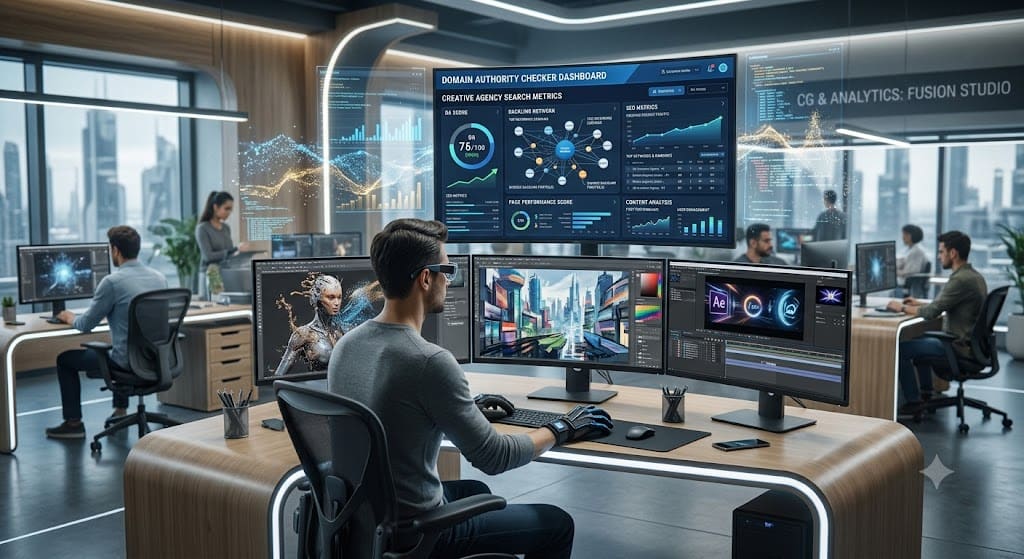
    Discover Moz Domain Checker Supports Better Computer Graphics Portfolios

      In the competitive world of computer graphics, creating impressive work is only part of the challenge. Artists, designers, animators, and digital studios must also ensure their portfolios are visible to potential clients, employers, and collaborators. Whether showcasing 3D models, motion graphics, digital paintings, architectural visualizations, or UI/UX projects, a portfolio’s success depends not only on creative quality but also on its online presence and this is where a Moz domain checker becomes a valuable asset.

      While commonly associated with search engine optimization (SEO), the tool can provide useful insights that help computer graphics professionals strengthen their websites, improve visibility, and build a stronger digital reputation.

      Why Online Visibility matters for Computer Graphics Professionals?

      The computer graphics industry is increasingly digital-first. Clients searching for freelance artists, agencies evaluating potential hires, and businesses looking for creative partners often begin their search online. As a result, a portfolio website serves as both a gallery and a professional marketing platform. Besides a well-designed portfolio can showcase:

      • 3D rendering projects
      • Motion graphics reels
      • Digital illustrations
      • Animation work
      • Branding and design case studies
      • User interface and user experience projects

      However, even exceptional portfolios may struggle to attract visitors if they lack visibility in search engines. This creates a challenge for many talented creatives whose work deserves attention but remains difficult to discover.

      Website authority and search performance therefore become important factors in helping creative professionals reach wider audiences.

      Understanding Domain Authority and Moz Domain Checker

      Moz Domain Checker is a tool designed to evaluate various metrics related to a website’s authority and SEO performance. One of its most recognized measurements is Domain Authority (DA), a score that estimates a website’s potential ability to rank in search engine results.

      For computer graphics portfolios, this information can provide valuable insights into how a website compares to competitors within the creative industry. A domain checker may help users evaluate:

      • Domain Authority scores
      • Backlink profiles
      • Linking domains
      • Website credibility indicators
      • SEO performance opportunities

      Although Domain Authority is not a direct ranking factor used by search engines, it serves as a useful benchmark for understanding a website’s overall online strength. For digital artists and studios, this information can guide efforts to improve visibility and attract more organic traffic.

      Building a Stronger Portfolio through Authority Growth

      Many computer graphics professionals focus heavily on visual presentation while overlooking technical website performance. However, the most successful portfolio sites often combine outstanding design with strong SEO fundamentals. Using insights from a domain checker, creators can identify opportunities to strengthen their site’s authority through:

      Quality Content Development

      Publishing project breakdowns, tutorials, behind-the-scenes articles, and case studies can attract visitors and encourage other websites to link back to the portfolio.

      Industry Networking

      Collaborating with design blogs, creative communities, and digital art publications can generate valuable backlinks that increase website authority.

      Portfolio Optimization

      Clear navigation, optimized image descriptions, and structured project pages help search engines better understand and index creative content.

      These improvements can increase the likelihood of potential clients discovering portfolio work through online searches.

      The Connection between Computer Graphics and SEO

      At first glance, computer graphics and SEO may seem unrelated. One focused on creating visuals, and the other leans into search performance. In reality, both disciplines share a common goal, effective communication.

      Computer graphics professionals carefully organize visual elements to guide viewers through a design. Similarly, SEO structures content and website architecture to guide search engines and users toward relevant information. For portfolio websites, this means balancing:

      • Visual appeal
      • Loading speed
      • Mobile responsiveness
      • Accessibility
      • Search engine visibility

      Large image files, high-resolution videos, and interactive elements are common in graphics portfolios. While these assets showcase creative skill, they can also affect website performance if not properly optimized.

      Turning Portfolio Data into Professional Growth

      The most effective portfolio websites are not static collections of work. Instead, they function as evolving digital platforms that support career development and business growth.

      By regularly reviewing authority metrics and website performance, designers and artists can make informed decisions about how to expand their online presence. Tracking improvements over time allows professionals to evaluate which strategies generate the greatest impact.

      For example, a studio may discover that publishing educational content attracts more backlinks, while a freelance designer may find that guest contributions to industry websites improve search visibility. These insights help transform a portfolio from a simple showcase into a powerful marketing asset.

      As competition within the computer graphics industry continues to grow, understanding website authority becomes increasingly valuable for standing out in crowded digital spaces.

      Proper Integration of Domain Checker to Computer Graphics Portfolio

      A strong computer graphics portfolio is built on more than exceptional visual work. In today’s online environment, discoverability plays a crucial role in attracting opportunities and building a professional reputation.

      Moz domain checker provides valuable insights into website authority, helping artists, designers, and digital studios better understand their online presence. By combining creative excellence with SEO awareness, computer graphics professionals can improve portfolio visibility, attract more visitors, and strengthen their position within the digital marketplace.

      Ray Tracing and High-End Visuals as Seen on xtremehd-4k.com

        Ray tracing has revolutionized the field of visual computing, offering lifelike lighting, shadows, and reflections in digital environments. Platforms like xtremehd-4k illustrate the broader adoption of high-end graphics capabilities, where 4K streaming and immersive content presentation align closely with the principles of ray tracing. Although the site itself may cater to premium IPTV experiences, the underlying graphical expectations are shaped by the same technologies that drive ray tracing.

        Whether in gaming or high-definition streaming, the drive for hyper-realistic visuals pushes graphic systems to leverage real-time rendering and advanced shading techniques. This results industry leaders to perform in-depth research on how computer graphics systems enable ray tracing and bring digital scenes closer to cinematic realism.

        Ray Tracing Simulates Real-World Light Behavior

        gpu advancement

        Simply put, ray tracing is mimicking the way light is traveling and interacting with objects and other surfaces. Unlike traditional rasterization, which simply paints objects on screen, ray tracing traces the path of light rays from the viewer’s eye to the light source. As a result, it delivers higher precision of reflections, ambient lighting, and shadows.

        The complexity lies in calculating each light interaction in real time. Reflections on glass, the glow of a neon sign, or soft shadows all require thousands of light paths to be simulated per frame. It’s the exact same reason why ray tracing requires powerful computing capabilities, and modern graphics to run smoothly.

        Visual Realism Enhances Immersion

        The level of detail made possible by ray tracing significantly elevates the visual experience, especially in gaming, film, and simulation. When light behaves naturally, bouncing off wet pavement, refracting through glass, or casting soft shadows, environments feel more believable.

        This realism pulls viewers deeper into the scene, making digital worlds more immersive and emotionally engaging. As consumers grow accustomed to cinematic-quality visuals, ray tracing becomes a key factor in meeting and exceeding modern expectations.

        Graphics Hardware and APIs Lead the Way

        Modern GPUs are specifically designed to handle ray tracing workloads. Architectures from companies like NVIDIA and AMD include specialized cores for ray acceleration. These cores handle the intense mathematical operations required for real-time ray tracing, making the technique viable even in consumer-grade devices.

        Additionally, APIs like DirectX Raytracing (DXR) and Vulkan Ray Tracing provide standardized tools for developers to integrate these effects.

        Applications beyond Entertainment

        While gaming and visual effects are the most recognized applications, ray tracing extends into other industries as well. Architecture, automotive design, and virtual prototyping all benefit from realistic rendering during design evaluation. Real-world lighting conditions can be simulated to test how spaces or surfaces will look before any physical construction begins.

        The increased fidelity offered by ray tracing is shaping how creators think about visual storytelling, product development, and user experience in high-definition environments. Ray tracing is also finding use in fields like medical imaging and scientific research, where accurate visual representation is critical. By simulating light behavior in complex models, researchers can better visualize anatomy, molecular structures, or environmental simulations with greater clarity and precision.

        Enhancing Your Graphic Design Projects with Windows 11 Pro

          windows 11 pro

          Graphic designers rely on powerful tools and efficient workflows to bring their creative visions to life. Windows 11 Pro, the latest operating system from Microsoft, is packed with features and enhancements that cater specifically to the needs of designers. Whether you’re working on complex vector illustrations, photo editing, or 3D modeling, Windows 11 Pro provides the performance and flexibility you need. This article explores how Windows 11 Pro can enhance graphic design projects and where to purchase a legitimate Windows 11 Pro key.

          Optimized Performance for Graphic Design

          Graphic design often involves handling large files and running resource-intensive applications. Windows 11 Pro is designed to maximize the performance of your hardware, ensuring that your system can handle demanding design tasks with ease. The operating system includes optimizations that make it faster and more efficient, allowing you to work on high-resolution images and complex designs without experiencing lag or slowdowns.

          One of the key features that benefit graphic designers is DirectStorage, which reduces load times and improves system responsiveness. This is particularly useful when working with large design files or running multiple applications simultaneously. You can find more information on Reddit if you’re looking to buy a legitimate Windows 11 Pro key.

          Advanced Graphic Design Software Compatibility

          Windows 11 Pro supports various graphic design software, making it a versatile choice for designers. Whether you prefer Adobe Creative Cloud, CorelDRAW, or Affinity Designer, Windows 11 Pro ensures seamless compatibility and optimal performance. Here are some of the most popular design tools that work exceptionally well on Windows 11 Pro:

          • Adobe Creative Cloud: This suite of applications, including Photoshop, Illustrator, and InDesign, is a staple for graphic designers. Windows 11 Pro ensures these applications run smoothly, allowing you to utilize their powerful features fully.
          • CorelDRAW: Known for its vector graphic design capabilities, CorelDRAW is another popular choice among designers. Windows 11 Pro supports CorelDRAW, providing a stable and efficient environment for creating vector illustrations and designs.
          • Affinity Designer: This vector graphic design software offers a cost-effective alternative to Adobe Illustrator. Windows 11 Pro ensures compatibility with Affinity Designer, allowing you to create detailed vector graphics without issues.

          Improved Multitasking with Snap Layouts

          Multitasking is an essential part of the graphic design process, as designers often need to switch between different applications and tools. Windows 11 Pro introduces Snap Layouts, a feature that allows you to organize your workspace more efficiently. With Snap Layouts, you can arrange your open applications into different layouts, making it easier to switch between tasks without losing focus.

          For example, you can have your design software open on one side of the screen, a web browser with design inspiration on another, and a file explorer with your design assets in a third window. This streamlined workflow helps you stay organized and focused, ultimately boosting your productivity.

          High-Quality Display Support

          Graphic designers rely on high-quality displays for accurate color representation and sharp detail. Windows 11 Pro supports high-resolution displays and advanced color management features, providing you with the best possible visual experience. The operating system includes HDR support, which enhances the color and contrast of your images, making your designs look more vibrant and lifelike.

          Additionally, Windows 11 Pro’s support for multiple monitors allows you to expand your workspace, giving you more screen real estate to work with. This is particularly useful for designers who need to view multiple documents or applications simultaneously.

          Enhanced Security Features

          Security is a crucial concern for graphic designers, especially when working with client files and sensitive information. Windows 11 Pro includes several advanced security features to protect your data and ensure your work remains safe. Some of the key security features include:

          • BitLocker: This encryption tool helps protect your data by encrypting your entire drive, ensuring unauthorized users cannot access your files.
          • Windows Defender: Integrated into Windows 11 Pro, Windows Defender provides real-time protection against viruses, malware, and other security threats.
          • Windows Hello: This biometric authentication system allows designers to secure their devices using facial recognition or fingerprint scanning, providing an extra layer of security.

          Seamless Cloud Integration

          In today’s digital age, cloud storage has become an essential tool for graphic designers. Windows 11 Pro seamlessly integrates with OneDrive, Microsoft’s cloud storage service. This allows you to easily back up your designs, access them from any device, and share them with clients or collaborators.

          OneDrive integration also makes it easy to collaborate on projects, as you can share folders and files with others and work on them simultaneously. This is particularly useful for designers who work in teams or need to share their work with clients for feedback and approval.

          Purchasing a Legitimate Windows 11 Pro Key

          When it comes to buying a legitimate Windows 11 Pro key, it’s essential to choose a trusted source. There are many counterfeit keys available online, which can lead to security risks and system instability. Here are some tips for purchasing a genuine Windows 11 Pro key:

          • Official Microsoft Store: The safest and most reliable place to purchase a Windows 11 Pro key is directly from the Microsoft Store. This ensures that you receive a genuine product with full support and updates from Microsoft.
          • Authorized Retailers: Purchase from authorized retailers who are recognized by Microsoft. These retailers offer genuine keys and often provide customer support for installation and activation.
          • Avoid Third-Party Sellers: Avoid third-party sellers offering keys at significantly lower prices. These keys are often counterfeit and can lead to various issues, including system crashes and security vulnerabilities.

          READ ALSO: 5 Reasons Why Purchasing a Windows 10 Home Product Key Can Enhance Your Computer Graphics Experience

          Conclusion

          Windows 11 Pro is an excellent choice for graphic designers, offering optimized performance, advanced software compatibility, enhanced multitasking capabilities, high-quality display support, robust security features, and seamless cloud integration. Investing in a legitimate Windows 11 Pro key ensures you have access to all these features and receive regular updates and support from Microsoft. By choosing Windows 11 Pro, graphic designers can create a more efficient and secure working environment, enabling them to focus on what they do best: creating stunning designs.

          From Pixels to Perfection: Adobe’s Influence on Computer Graphics

            adobe

            Let’s explore the world of computer graphics with Adobe and Adobe partners as your creative companion. Explore how Adobe’s industry-leading software, such as Photoshop and Illustrator, has become synonymous with digital design excellence. From pixel-perfect photo editing to vector-based illustration, uncover the innovative tools and techniques that have made Adobe the go-to platform for graphic designers, artists, and visual storytellers worldwide.

            The Evolution of Adobe’s Software

            Since its inception, Adobe has been at the forefront of revolutionizing the way we create and manipulate digital images. Let’s delve into the evolution of some of Adobe’s most influential software:

            • Photoshop:
              • Photoshop, first released in 1988, has undergone numerous updates and enhancements, cementing its status as the premier photo editing software.
              • With features like layers, masks, and filters, Photoshop offers unparalleled control over image manipulation.
              • Its integration with Adobe’s Creative Cloud ecosystem ensures seamless workflow and access to a vast array of resources.
            • Illustrator:
              • Adobe Illustrator, introduced in 1987, revolutionized vector-based illustration.
              • Its precise tools and ability to create scalable graphics have made it indispensable for designers across various industries.
              • Illustrator’s compatibility with other Adobe software allows for effortless collaboration and integration into multi-platform projects.

            Adobe’s Impact on Graphic Design

            Adobe’s software suite has significantly influenced the field of graphic design, shaping the way professionals approach their work:

            • Workflow Efficiency:
              • Adobe’s intuitive interfaces and powerful features streamline the design process, allowing artists to focus on creativity rather than technicalities.
              • Integration with Adobe Creative Cloud enables designers to seamlessly switch between applications, maintaining workflow continuity.
            • Standardization:
              • Adobe software has set the standard for the industry, with file formats like .psd and .ai becoming ubiquitous in the design world.
              • This standardization facilitates collaboration and ensures compatibility across different platforms and devices.
            • Versatility:
              • Whether creating logos, posters, or digital artwork, Adobe’s tools offer versatility to meet the diverse needs of designers.
              • From intricate illustrations to minimalist designs, Adobe software provides the flexibility to bring any creative vision to life.

            Adobe’s Role in Digital Artistry

            Beyond graphic design, Adobe has played a pivotal role in advancing digital artistry across various mediums:

            • Photography:
              • Photoshop’s robust features make it indispensable for photographers, allowing them to enhance, retouch, and manipulate images with precision.
              • Adobe Lightroom complements Photoshop, providing photographers with powerful tools for organizing and editing their photo libraries.
            • Animation and Motion Graphics:
              • Adobe After Effects and Adobe Animate have become go-to tools for animators and motion graphic artists.
              • With features like keyframing, masking, and particle effects, these applications empower artists to create stunning visual effects and animations.

            Partnering with Adobe for Enhanced Solutions

            As an Adobe solution partner, you gain access to exclusive resources and expertise tailored to enhance your creative endeavors:

            • Cutting-Edge Integration Solutions:
              • Partnering with Adobe opens doors to cutting-edge product integration solutions, ensuring seamless compatibility and workflow optimization.
              • Integration with Adobe Commerce Cloud provides advanced e-commerce capabilities, empowering businesses to deliver exceptional digital experiences.
            • Exclusive Marketing and Training Resources:
              • Gain access to exclusive marketing materials and training resources designed to help you leverage Adobe’s suite of tools effectively.
              • Stay updated on the latest trends and techniques through workshops, webinars, and tutorials provided by Adobe and its partners.

            READ ALSO: Exploring the Wonders of Computer Graphics

            Conclusion

            Adobe’s influence on computer graphics is undeniable, with its software shaping the way we create, communicate, and express ourselves visually. From the early days of Photoshop and Illustrator to the modern era of Creative Cloud, Adobe has remained at the forefront of innovation, empowering creators worldwide. Whether you’re a seasoned professional or an aspiring artist, partnering with Adobe opens doors to endless possibilities, ensuring your journey from pixels to perfection is nothing short of extraordinary.

            Exploring the Wonders of Computer Graphics

              In today’s world, computer graphics are everywhere, making our visual experiences more prosperous and more exciting. Whether it’s the breathtaking scenery in your favorite video game or the jaw-dropping effects in blockbuster movies, computer graphics keep improving and becoming more imaginative. And with technology constantly improving, there’s no telling what amazing things we’ll see next, especially regarding website design Dallas, where innovation thrives.

              Understanding Computer Graphics

              Computer graphics involve making, changing, and showing visual stuff with computers. This includes all sorts of tricks like making 2D and 3D images, animations, touching up pictures, and creating virtual reality. Using clever algorithms and computer hardware, computer graphics let artists and developers turn their ideas into vibrant digital displays.

              Applications Across Industries

              Computer graphics have a significant effect on lots of different areas. In entertainment, CGI (Computer Generated Imagery) changes the game in moviemaking, letting directors dream up fantastic worlds and creatures we could only imagine before. For architects and engineers, CAD (Computer-Aided Design) software makes creating exact and detailed plans easier. 

              And beyond that, computer graphics help in education, healthcare, marketing, and more by improving how we talk and solve problems.

              Evolution and Milestones

              There have been some critical moments in the history of computer graphics. In the 1960s, Ivan Sutherland and David Evans did some groundbreaking work. Then, in the 1990s, Pixar Animation Studios came out with game-changing movies like “Toy Story.” Each period brought significant improvements in both the tech and creative sides of things. Nowadays, we’re still seeing significant strides forward, especially with real-time rendering and better GPU (Graphics Processing Unit) tech driving innovation in computer graphics.

              Challenges and Future Trends

              Computer graphics have come a long way, but there are still some hurdles to jump over, like making things look super realistic in video games and making the interfaces for virtual reality even better. Researchers use machine learning and augmented reality to improve computer graphics for entertainment, education, and simulations. 

              Computer graphics showcase the incredible imagination and technical brilliance of humans. Since its early days, this area has completely changed how we see and engage with digital content. As technology advances, there’s no telling what we can achieve with computer graphics, opening up a world of innovation and exploration. Whether you’re profoundly experienced or curious, diving into computer graphics will amaze and inspire you.

              Enhancing Your Brand’s Visual Identity: How Computer Graphics Elevate SMM Campaigns

                Graphic designer for SMM

                Effective social media marketing (SMM) is crucial for businesses looking to connect with their audience and stand out in a crowded online landscape. One powerful tool that can significantly impact your SMM campaigns is computer graphics.

                These visual elements can elevate your brand’s identity, engage your audience, and drive better results.

                In this article, we’ll explore how computer graphics can enhance your brand’s visual identity and take your SMM efforts to the next level.

                1. Captivating Content Creation

                When it comes to SMM, content is king. To capture the attention of your target audience, you need visually appealing and engaging content. Computer graphics allow you to create eye-catching images, infographics, and videos that tell your brand’s story effectively. Whether it’s designing stunning social media posts or crafting informative graphics, the versatility of computer graphics tools empowers you to produce captivating content that resonates with your audience.

                2. Consistency Across Platforms

                Maintaining a consistent visual identity across various social media platforms is essential for brand recognition. Computer graphics enable you to create branded templates, color schemes, and design elements that can be seamlessly applied to all your SMM channels. Consistency not only reinforces your brand’s identity but also builds trust with your audience, as they become familiar with your visual style.

                3. Enhanced Storytelling

                Effective storytelling is at the heart of successful SMM campaigns. Computer graphics provide a dynamic way to convey your brand’s narrative. Infographics, for example, can break down complex information into digestible visuals, making it easier for your audience to understand and engage with your message. Visual storytelling through graphics can evoke emotions, explain processes, and drive home key points more effectively than text alone.


                ALSO READ: Enhancing Computer Graphics: The Impact of Top Minecraft Servers


                4. Increased Engagement

                Interactive and visually appealing content tends to generate higher levels of engagement on social media platforms. Whether it’s interactive polls, animated graphics, or visually striking videos, computer graphics can transform your SMM campaigns into interactive experiences. Encouraging likes, shares, and comments not only boosts your content’s visibility but also helps you build a stronger online community around your brand.

                5. Data Visualization

                Numbers and statistics can be daunting, but computer graphics excel at simplifying data visualization. They can turn complex data into compelling visuals, making it easier for your audience to grasp and connect with the information you’re sharing. Whether it’s showcasing business growth, customer testimonials, or industry trends, data-driven graphics can help you make a persuasive case on social media.

                6. Adaptation to Trends

                The digital landscape is constantly evolving, and staying up-to-date with the latest SMM trends is crucial. Computer graphics allow you to quickly adapt to new trends, whether it’s creating graphics for a trending hashtag, participating in challenges, or capitalizing on popular visual styles. Being agile in your SMM approach keeps your brand relevant and responsive to the changing online environment.

                In conclusion, computer graphics are a valuable asset in enhancing your brand’s visual identity and boosting the effectiveness of your SMM campaigns. From creating captivating content to maintaining consistency, facilitating storytelling, and driving engagement, computer graphics play a pivotal role in elevating your brand’s presence on social media. By leveraging the power of computer graphics, you can make a lasting impression and achieve your SMM goals with greater impact.

                𐌢